
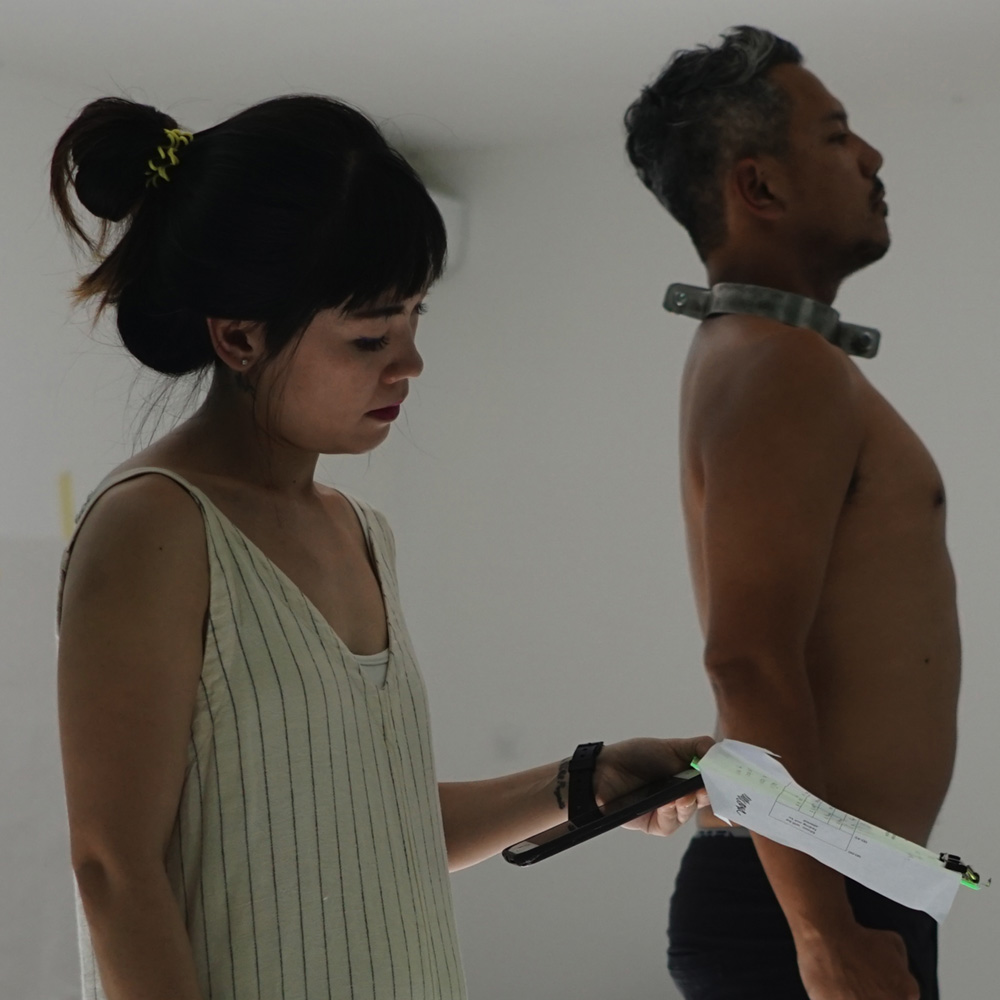
Octora
(b. 1982, Indonesian)
Octora is a Melbourne-based Postwar & Contemporary artist who was born in Bandung, Indonesia. She studied law at Parahyangan University, Bandung, before entering the Faculty of Art and Design at Bandung Institute of Technology (ITB), majoring in sculpture. In 2017, she completed her Master of Contemporary Art at Victorian College of the Arts, Melbourne University, Australia.
Octora’s art evolves from her ongoing fascination with the unstable ground between Indonesia’s image, history, and collective memory. Her interdisciplinary approach possibly stemmed from her earlier experience combining her Fine Arts degree with a Bachelor of Laws degree, where she eventually decided to focus on visual arts. Octora emerged as an artist nearly two decades after the fall of the authoritarian New Order regime in 1998 and created works that examine the past in a meaningful way. The artist’s reassessment of Indonesia’s colonial history comes from a gendered perspective, critical of its ongoing impact on the representation of women in present-day Indonesia. Octora’s choice of materials in her body of work presents a new way of engaging with Indonesia’s past; by representing sexual differences through materiality.
Since her solo exhibition in 2007 “The Nonya’s Project,” CCF, Bandung, Octora has participated in various exhibitions and projects in Indonesia and overseas, including joining artist residencies at ZKU (Zentrum fur Kunst und Urbanistik), Berlin (2014); Centre Intermodes, France (2012); Bamboo Curtain Studio, Taiwan (2010) and Cemeti Art House (2009). Her group exhibitions include an online exhibition titled Viral Self-portraits hosted by Museum of Contemporary Art Metelkova, Slovenia (2020), Contemporary Worlds: Indonesia at the National Gallery of Australia (2019); #Perempuan at Space 28 VCA Performing Arts, Melbourne, Australia (2018); Historia Docet Historia Vitae Magista at D Gallerie Jakarta (2016) and many more. In 2015, Octora held her solo exhibition at D Gallerie with the title After Happiness, curated by Rifky Effendy.