13 September 2025
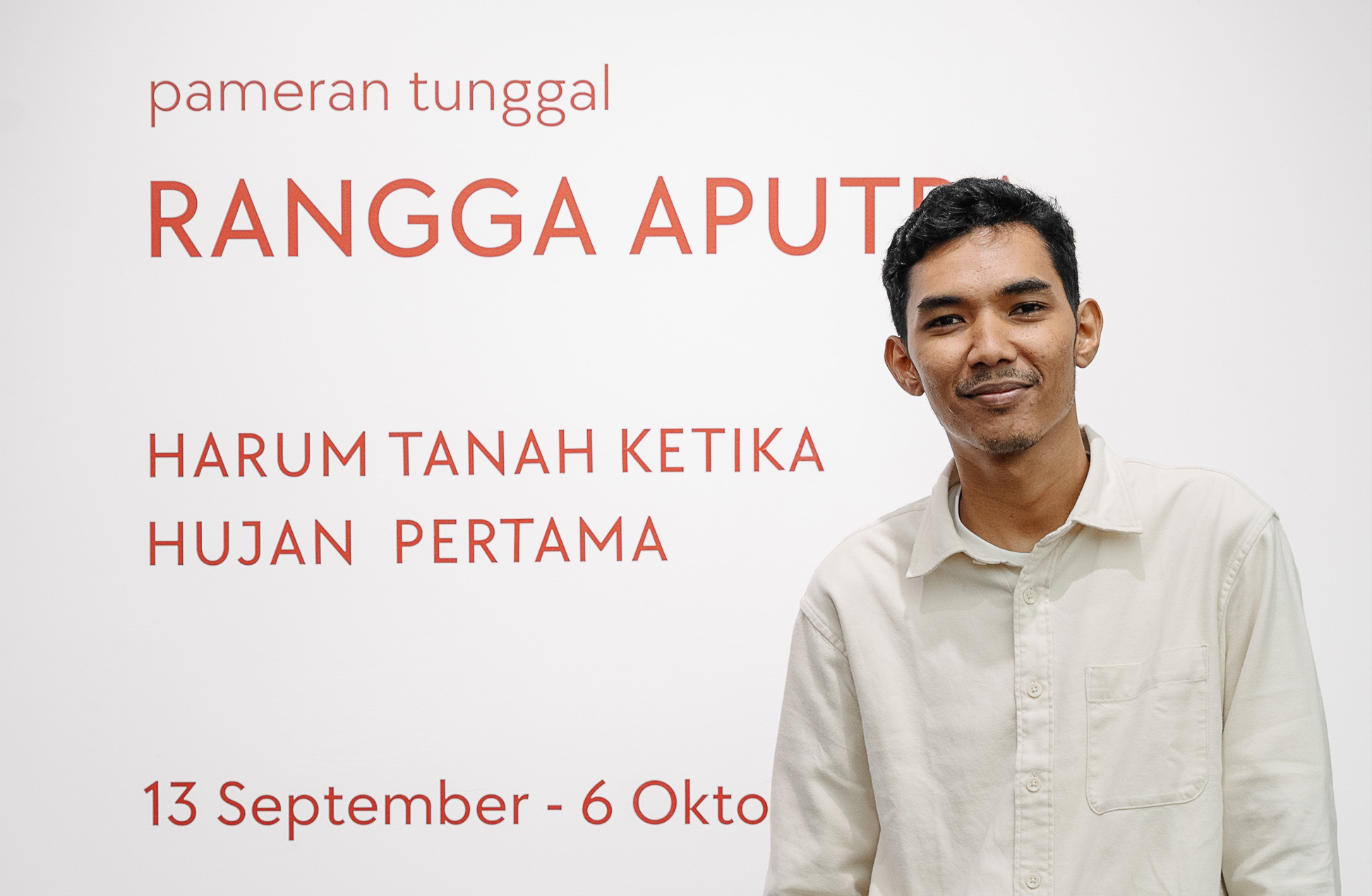
Harum Tanah Ketika Hujan Pertama by Rangga Aputra
“Harum Tanah Ketika Hujan Pertama” (The Scent of Earth When the First Rain Falls), often referred to as the smell of rain-soaked soil, or the scent of nature. It also relates to the matter of time, a natural event signaling the end of the dry season and the arrival of the rainy season, which will nurture plants that have withered, uniting them once again with the earth. Metaphorically, it can also be interpreted as nature greeting us, its aroma whispering about memories of the past, while at the same time bringing a message of joy with the arrival of a new day.
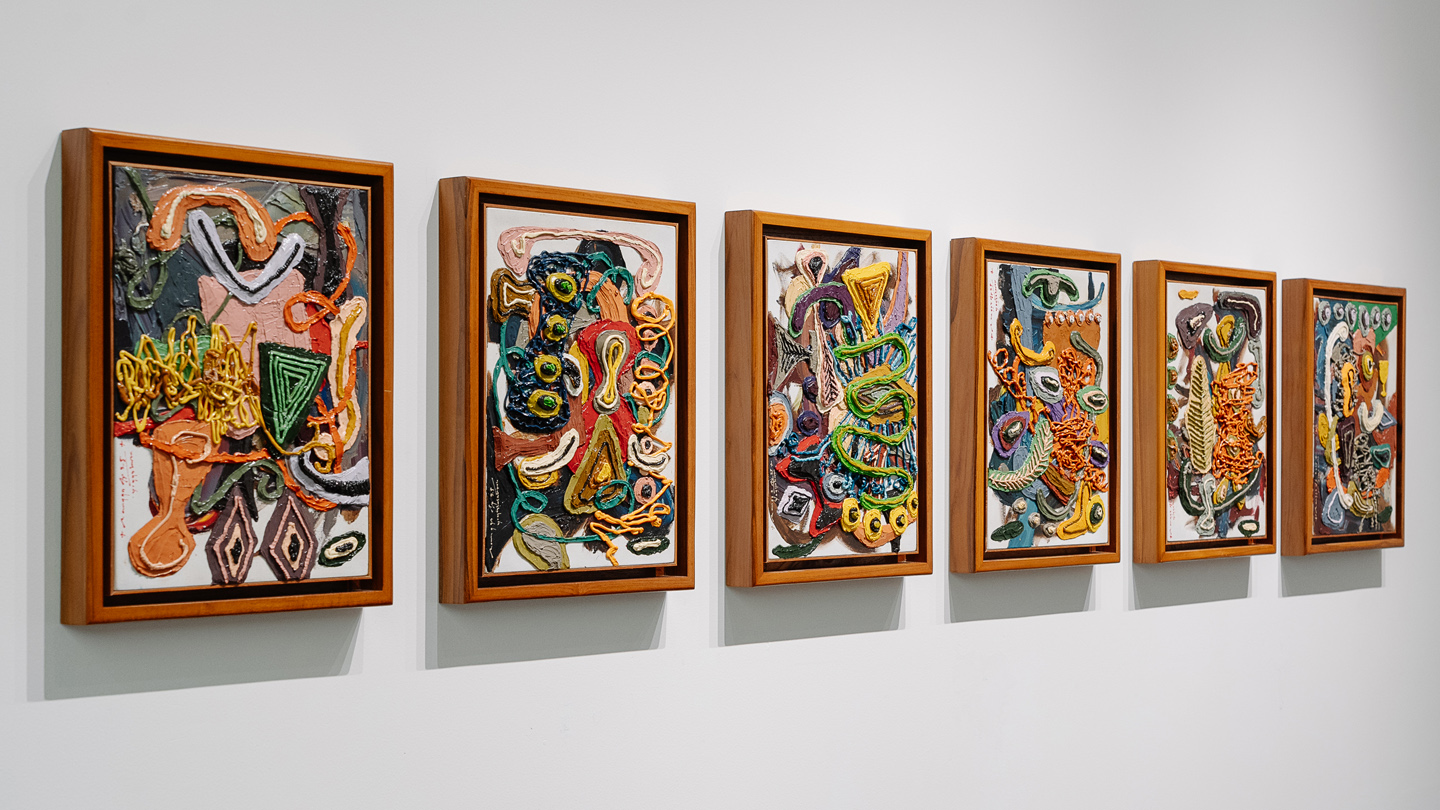
The uniqueness of Harum Tanah Ketika Hujan Pertama can be felt in the works of Rangga Aputra in this solo exhibition. There is simplicity in the choice of words and colors drawn from everyday life and the surrounding environment dictions and ecological hues that permeate his works as a whole. The choice of dictions, which are easily understood, are closely tied to nature, earth, sky, foliage, and plants, intertwining with imagination and instinct. This awareness is embedded in memories, social, cultural, and spiritual experiences, as well as the desire to preserve recollections that carry traces of the past and daily life nostalgic, yet at the same time empathetic.
Another form of simplicity we may encounter lies in the artistic gesture that underlies his works, not born from the plants themselves, but stemming from the “play of light” that produces black-and-white specks, like fireflies scattered across one’s vision blinking, or dots and lines of light resembling “forms” that float, intertwine, overlap, intersect, and so forth. At the same time, abstractions of leaves, plant stems, or vegetation emerge, imaginatively coiling into tendrils. The movements of his lines also appear without rigid structure, yet remain formal, where one may find ecological brushstrokes that further reinforce Rangga’s artistic awareness a subjective tendency that draws closer to unique elements, capable of being read by the soul.
A. Anzieb